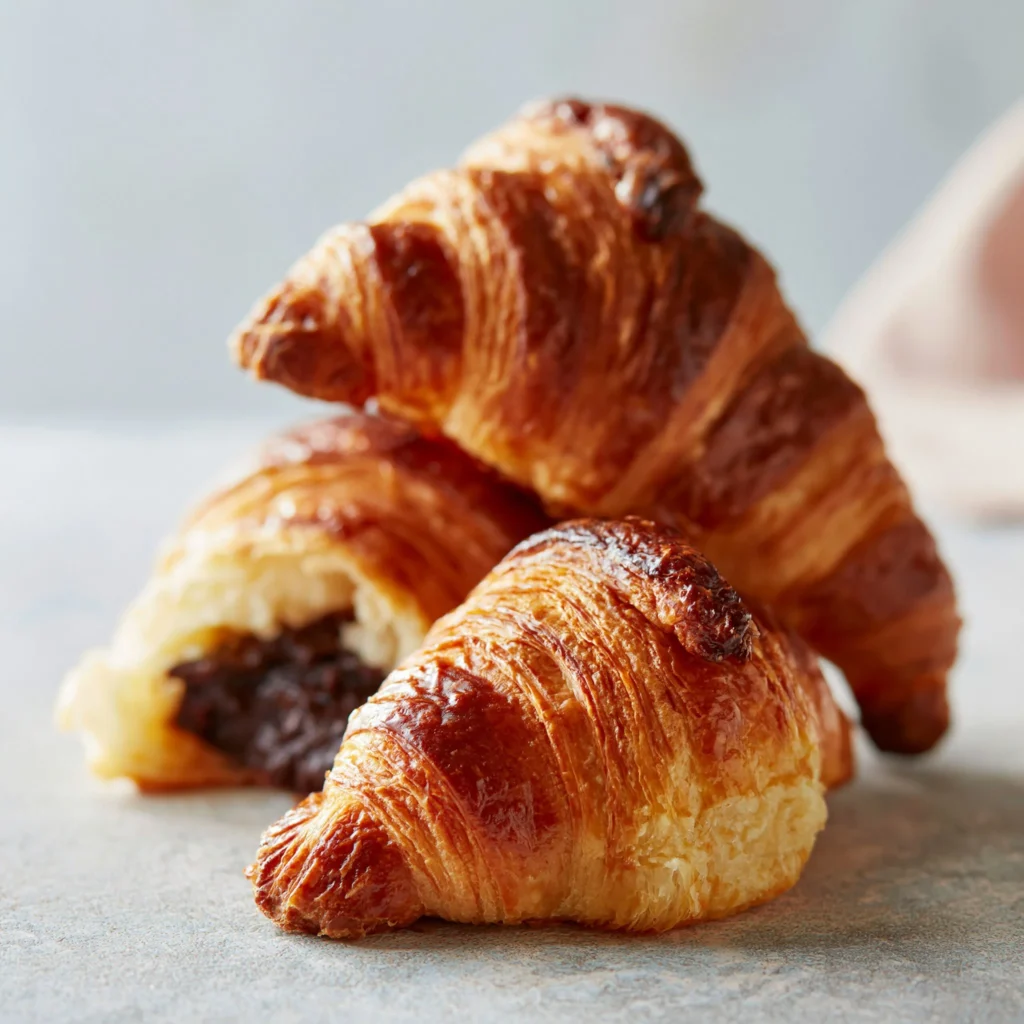
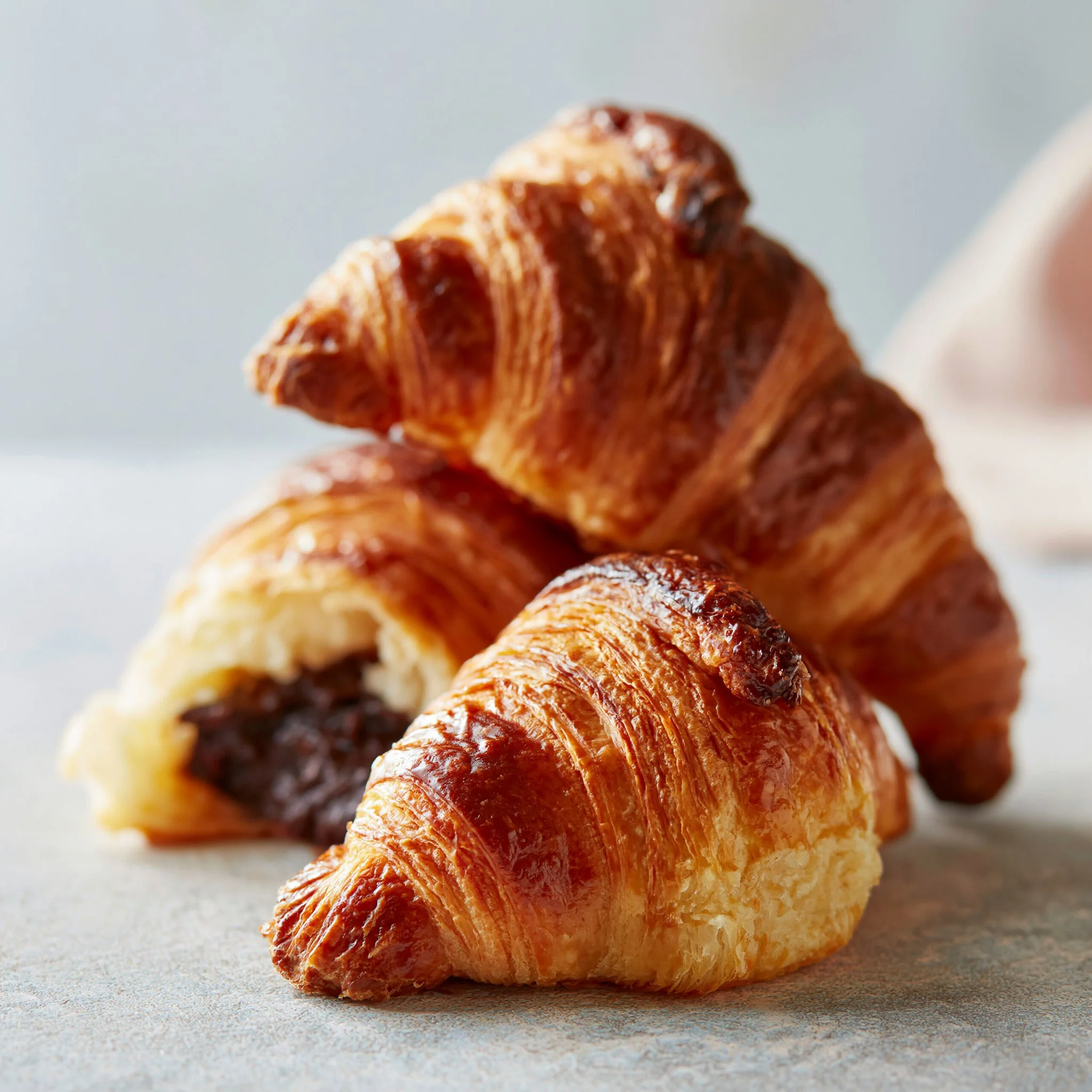
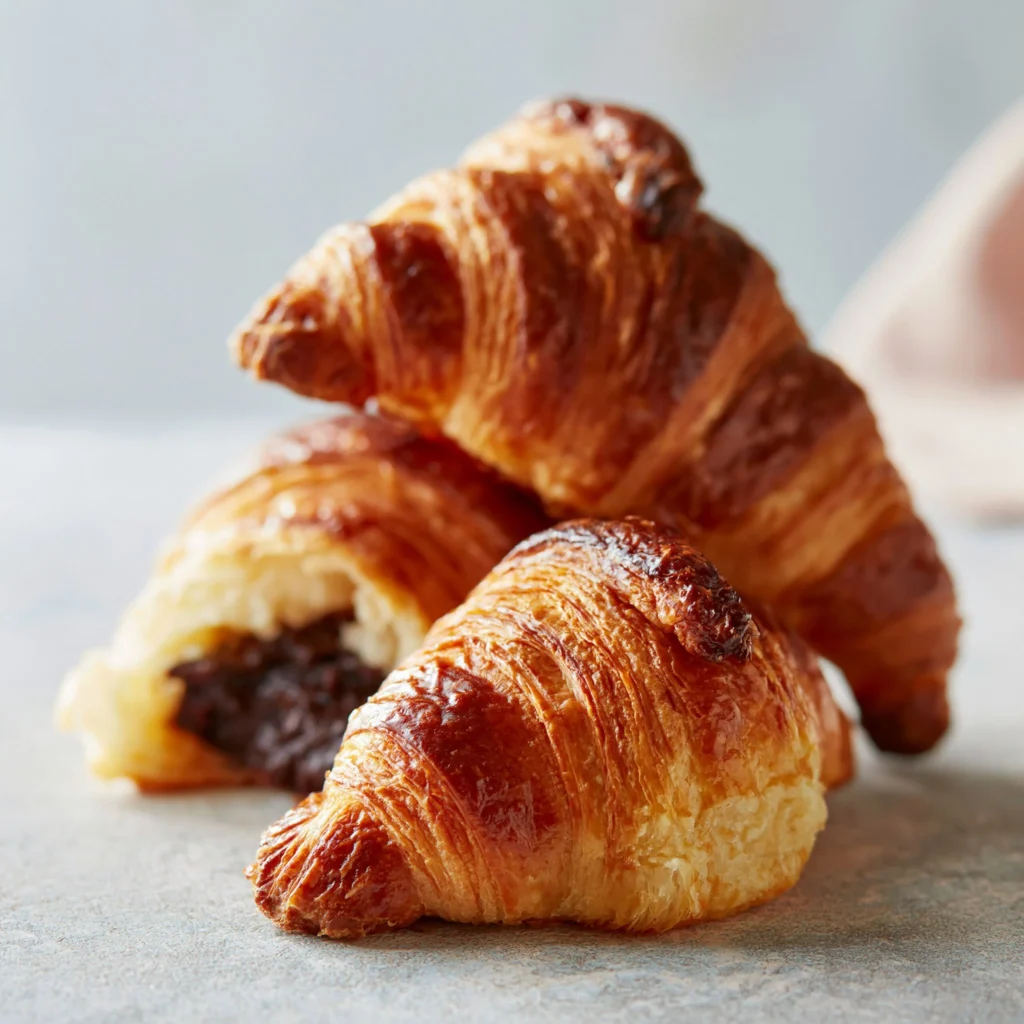
The first time you pull a tray of homemade chocolate croissants from the oven, you’ll understand the obsession: deeply golden tops, shatteringly crisp layers, and that little ribbon of melted chocolate that perfumes the whole kitchen. These are pain au chocolat–style croissants—tidy rectangles that bake up tall and flaky, with a buttery honeycomb inside.
This version is very doable at home because it leans on short, cold rests (30 minutes at a time) to keep the butter where it belongs: in thin sheets, not melted into the dough. If you love chocolate bakes, you’ll also appreciate how clean and classic the flavor is—semi-sweet chocolate against lightly sweetened, rich dough (kind of the same “simple but dangerous” vibe as my chocolate chip cookie cake, but in laminated pastry form).
Why You’ll Love This Recipe
- Real bakery layers at home: Three turns create those distinct, flaky sheets that crackle when you bite in.
- Not-too-sweet dough: Just 1/4 cup sugar in the dough keeps the croissant buttery and balanced so the chocolate shines.
- Make-ahead friendly: After the final fold, the dough can rest 4 hours or overnight—perfect for baking the next day.
- A tidy, reliable shape: Cutting into rectangles (instead of crescents) makes rolling and sealing especially straightforward.
- That glossy, golden finish: A simple egg-and-milk wash gives you a burnished top without making the crust tough.
The Story Behind This Recipe
I developed this recipe for the days I want “bakery energy” without leaving the house—something I can start in the afternoon, chill overnight, and bake the next morning. The little 30-minute chills between turns are the unsung heroes here; they keep the butter layer cool and cooperative so the dough rolls smoothly instead of smearing.
What It Tastes Like
These croissants taste like warm butter and toasted sugar with a gentle yeast aroma—think lightly sweet bread meets caramelized pastry edges. The outside is crisp and bronzed, while the inside stays tender and layered, with dark, melty chocolate tucked into the center. When they’re still slightly warm, the chocolate is soft and glossy, and the crumb pulls apart in thin, delicate strands.
Ingredients You’ll Need
The key players here are cold whole milk (it keeps the dough cool while mixing), unsalted butter (for clean, sweet richness), and good semi-sweet chocolate (because you’ll taste it in every bite). If you can find chocolate batons, they melt into neat pockets; if not, cutting high-quality semi-sweet chocolate into bars works beautifully—similar to the way I focus on using great chocolate in my German chocolate cheesecake, where the chocolate flavor has nowhere to hide.
-
For the Dough:
- 4 cups (500g) all-purpose flour
- 1/4 cup (50g) granulated sugar
- 1 tsp salt
- 2 1/4 tsp (1 packet) instant yeast
- 1 1/4 cups (300ml) cold whole milk
-
For the Butter Layer:
- 1 cup (226g) unsalted butter, softened
- 2 tbsp all-purpose flour
-
For the Filling:
- 16 chocolate batons or 8 oz high-quality semi-sweet chocolate, cut into bars
-
For the Egg Wash:
- 1 large egg
- 1 tbsp milk
-
Optional:
- Confectioners’ sugar for dusting
How to Make Homemade Chocolate Croissants
-
Mix the dough.
In a stand mixer bowl, combine the flour, sugar, salt, and instant yeast. With the dough hook running, slowly pour in the cold milk and knead for about 5 minutes. You’re looking for a dough that’s soft and smooth but still a little tacky—if you press a fingertip in, it should feel slightly sticky without leaving wet dough on your finger. -
Chill the dough (first rest).
Cover the bowl and refrigerate for 30 minutes. This short chill makes rolling easier and helps prevent the butter layer from melting later. -
Make the butter layer.
Beat the softened butter and 2 tablespoons flour until completely smooth and spreadable (no lumps). Shape it into a 7×10-inch rectangle—squared-off corners help the lamination stay even. Refrigerate for 30 minutes, until the butter is cool and pliable (not rock-hard). -
Encapsulate the butter.
Roll the chilled dough into a 14×10-inch rectangle. Place the butter rectangle in the center, then fold the dough over it to fully encase the butter. Seal the edges tightly—this is your best defense against butter squeezing out during rolling. -
Turn #1 (roll + fold), then chill.
Roll the dough into a 10×20-inch rectangle. Fold it lengthwise into thirds like a letter. Cover and refrigerate for 30 minutes.
Visual cue: After folding, the dough should look neat and layered at the edges, not streaky with butter. -
Turns #2 and #3, with chills.
Repeat the same roll-to-10×20, fold-into-thirds process two more times, chilling for 30 minutes after each turn. If the dough ever feels springy or the butter starts to soften, don’t push through—get it cold again before continuing. -
Long chill (for best layers).
After the final fold, refrigerate the dough for 4 hours or overnight. This rest relaxes the gluten and firms the butter so shaping is clean and easy. -
Roll and cut.
Roll the chilled dough into an 8×20-inch rectangle. Cut into sixteen 2×5-inch rectangles.
Tip: Use a decisive cut (not a sawing motion) so you don’t compress the layers. -
Fill and shape.
Gently stretch each rectangle to about 8 inches long. Place a chocolate baton (or a bar of chocolate) at one end and roll up tightly. Set each croissant seam-side down so it doesn’t unravel as it proofs and bakes. -
Proof, then chill again.
Arrange on lined baking sheets. Cover loosely and let proof at room temperature for 1 hour, then refrigerate for 1 hour. They should look slightly puffed and airy, but not collapsed—this two-step proof/chill helps keep the butter cold going into the oven for maximum flake. -
Egg wash and bake.
Preheat the oven to 400°F (204°C). Whisk together the egg and milk, then brush a thin, even coat over each croissant (avoid letting egg wash pool on the pan). Bake for 20 minutes, rotating pans halfway through, until deeply golden with crisp edges. -
Cool and finish.
Let the croissants cool slightly on a wire rack so the interior sets and the chocolate stops being scorching-hot. Dust with confectioners’ sugar if you like. If you’re serving right away, wait 5–10 minutes—the chocolate centers stay hot longer than you think.
Tips for Best Results
- Keep the butter pliable, not hard. Your butter rectangle should bend without cracking; if it’s too cold, it can shatter and create uneven layers when you roll.
- Seal the dough well around the butter. Take an extra moment to press the seams closed—leaks usually start at the edges during the first roll-out.
- Chill is part of the technique. Those 30-minute rests aren’t “optional downtime”; they’re what keeps the butter in distinct layers so you get that crisp lift.
- Stretch gently before rolling. Pulling each 2×5-inch piece to 8 inches gives you more spirals and a better chocolate-to-pastry ratio (similar to how I chase the right bite balance in my cheesecake-stuffed chocolate chip cookies).
- Bake to real color. Pale croissants can taste doughy and won’t be as crisp—look for a rich golden brown, especially along the ridges and corners.
Variations and Substitutions
- Chocolate choice: Use chocolate batons for the cleanest, bakery-style center, or cut semi-sweet chocolate into bars for a more rustic melt.
- Finish: A light confectioners’ sugar dusting is pretty and classic, but optional—these are plenty flavorful without it.
- Shape: Stick with the rectangle cut-and-roll method here; it’s the most reliable for an even bake and tidy seam.
How to Serve It
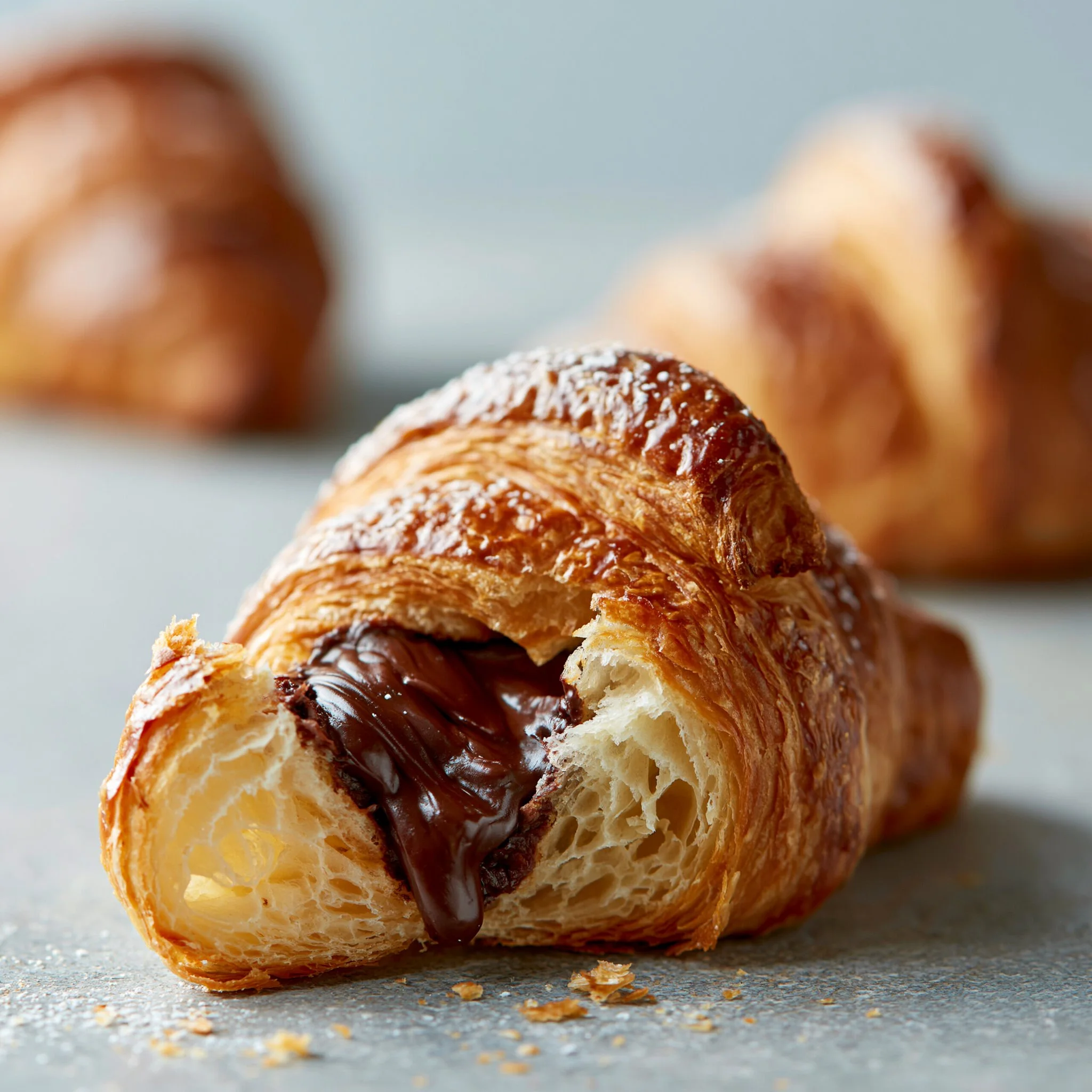
Serve these slightly warm so the chocolate is soft but not lava-hot. I love them plain (the butter and semi-sweet chocolate are enough), or with a very light dusting of confectioners’ sugar for that bakery window look. They’re also excellent alongside coffee or hot chocolate—lean into the cozy chocolate notes, like you would with my chocolate orange shortbread when you want something small but deeply satisfying.
How to Store It
- Same day: These are at their flakiest within a few hours of baking. Keep them at room temperature until serving.
- Next day: Store at room temperature and reheat briefly in the oven just until the exterior re-crisps and the chocolate softens again. (Skip the microwave if you can—it tends to soften the crust and blur the layers.)
- Make-ahead dough: Use the recipe’s built-in flexibility—after the final fold, refrigerate the dough for 4 hours or overnight, then shape and bake when you’re ready.
Final Thoughts
Homemade chocolate croissants take a little patience, but the steps are steady and the payoff is unmistakable: crisp, buttery layers with a generous stripe of melted chocolate in the center. Once you’ve made them once, the rhythm of roll–fold–chill becomes surprisingly calming—and your kitchen will smell like a real pastry case.
Conclusion
If you’d like to compare lamination styles and shaping visuals, this Homemade Chocolate Croissants (Pain au Chocolat) guide is a helpful reference. For a different home-kitchen approach and timeline, you can also look at Easy Chocolate Croissants. And for more technique notes and troubleshooting, Homemade Chocolate Croissants is another solid walkthrough.
Chocolate Croissants (Pain au Chocolat)
Ingredients
Method
- In a stand mixer bowl, combine the flour, sugar, salt, and instant yeast. With the dough hook running, slowly pour in the cold milk and knead for about 5 minutes until soft and smooth but slightly tacky.
- Cover the bowl and refrigerate for 30 minutes.
- Beat the softened butter and 2 tablespoons of flour until smooth. Shape into a 7x10-inch rectangle and refrigerate for 30 minutes.
- Roll the chilled dough into a 14x10-inch rectangle and place the butter in the center. Fold the dough over to encase the butter and seal the edges.
- Roll the dough into a 10x20-inch rectangle, fold into thirds and chill for 30 minutes. Repeat two more times. After the last fold, refrigerate for 4 hours or overnight.
- Roll the chilled dough into an 8x20-inch rectangle. Cut sixteen 2x5-inch rectangles.
- Gently stretch each rectangle to about 8 inches long, place a chocolate baton at one end, and roll up tightly. Arrange on lined baking sheets seam-side down.
- Let croissants proof at room temperature for 1 hour, then refrigerate for 1 hour.
- Preheat the oven to 400°F (204°C). Whisk together the egg and milk, brush over each croissant, and bake for 20 minutes until golden.
- Let cool slightly on a wire rack and dust with confectioners’ sugar if desired.