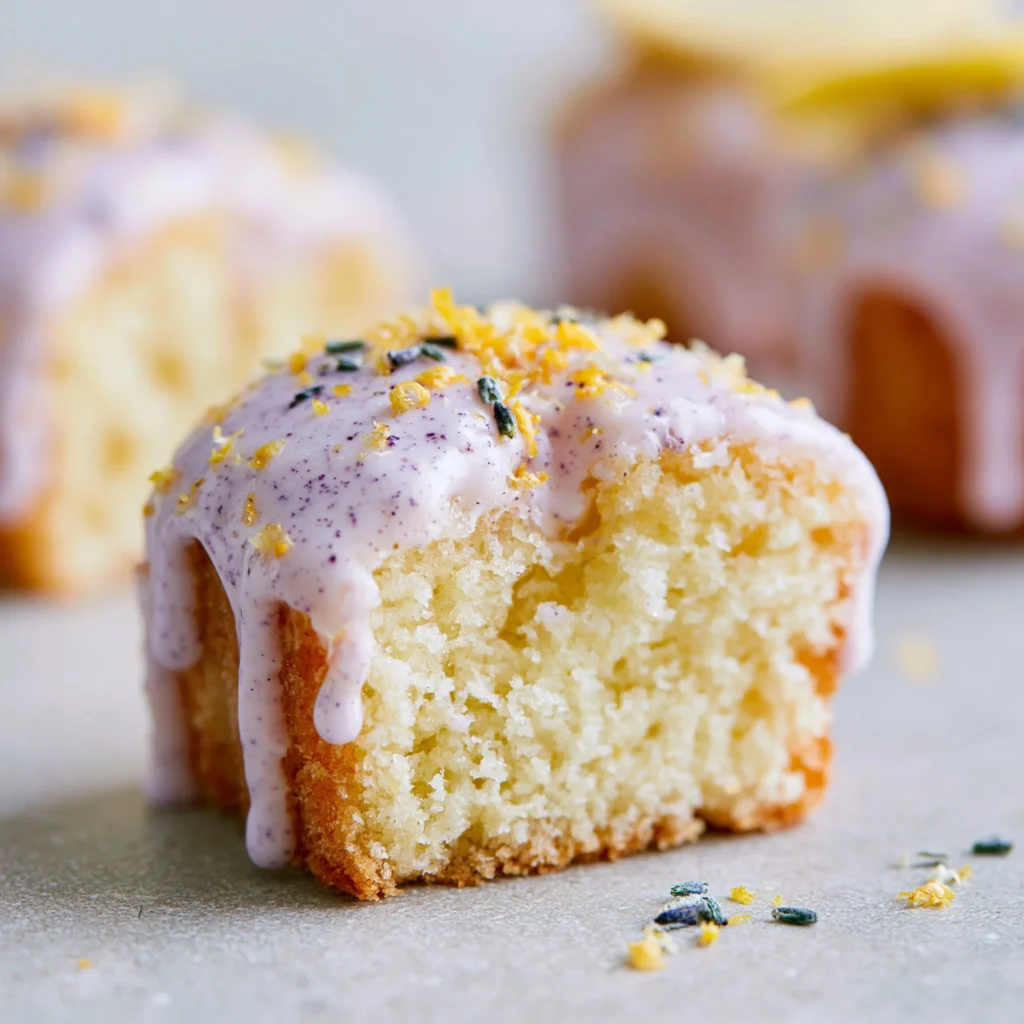
The best thing about these mini lemon cakes is the contrast: buttery, tender little cakes with a bright lemon-zest perfume, finished with a pale lavender glaze that sets into a soft, sweet shell. They look like you fussed—but the batter comes together the way a good weekend bake should: straightforward, familiar, and forgiving.
They’re also the kind of treat that plays well on a pretty plate. If you like the tidy, handheld feel of mini desserts like my pineapple mascarpone upside-down mini cakes, you’ll love how these glaze and garnish beautifully with a pinch of lemon zest and a few edible flowers.
Why You’ll Love This Recipe
- Big lemon flavor without bitterness: rubbing or mixing the zest into the sugars perfumes the batter so the cakes taste lemony, not sharp.
- Tender, plush crumb: sour cream and whole milk keep the cakes soft and moist, even after they cool.
- A gentle floral finish: a small amount of culinary lavender steeps into the milk, giving the glaze a light botanical note (not soapy).
- Glaze that behaves: the powdered sugar glaze goes on glossy, then sets into a smooth veil that clings to the tops.
- Mini size, maximal payoff: you get a bakery-style look—especially with edible flowers—without layers or complicated decorating.
- Easy to portion and serve: individual cakes are neat for sharing and don’t need slicing.
The Story Behind This Recipe
I wanted a lemon cake that felt a little dressed up without turning into a project, and lavender was the answer—just 1/2 teaspoon, steeped into warm milk for a clean, fragrant glaze. The brown sugar in the batter adds a subtle caramel warmth that keeps the lemon from feeling too sharp, and the result is a mini cake that tastes as pretty as it looks.
What It Tastes Like
Think: buttery vanilla-lemon cake with a soft, fine crumb and a gentle tang from sour cream, topped with a sweet glaze that smells faintly of lavender fields after rain. The lemon zest pops first, then the floral note lingers quietly in the background, especially when you take a bite that includes a bit of set glaze.
Ingredients You’ll Need
A few details make a big difference here: room-temperature butter and eggs help the batter emulsify so the cakes bake up even and tender; lemon zest brings punchy citrus aroma without adding extra liquid; and culinary lavender should be steeped (not stirred in dry) so the glaze tastes clean and balanced. If you don’t have flaky kosher salt, just use the kosher salt you normally bake with—salt is what keeps the sweetness and floral notes from tasting flat.
- 1 1/3 cups all-purpose flour
- 1/2 tsp. kosher salt
- 1/8 tsp. baking soda
- 1/2 cup unsalted butter, softened
- 2/3 cup granulated sugar
- 1/3 cup packed light brown sugar
- 1 Tbsp. grated lemon zest (from 2 lemons)
- 2 large eggs, at room temperature
- 1/4 cup sour cream, at room temperature
- 1/4 cup whole milk, at room temperature
- 1 tsp. vanilla extract
- 1/4 cup whole milk
- 1/2 tsp. culinary lavender
- 1 1/2 cups powdered sugar
- 1/4 tsp. kosher salt
- 1/8 tsp. vanilla extract
- as needed Edible flowers and lemon zest (for garnish)
How to Make Mini Lemon Cakes With Lavender Glaze
-
Get set up for baking.
Have your ingredients at room temperature (butter, eggs, sour cream, and the 1/4 cup milk for the batter). This helps the batter turn creamy instead of curdled-looking. If you’re a fan of quick, tidy bakes, this setup step is the same rhythm I use for easy moist cupcakes with vanilla frosting—it pays off. -
Mix the dry ingredients.
In a bowl, whisk together the flour, 1/2 teaspoon kosher salt, and baking soda until evenly combined. You’re looking for a uniform mix—no streaks of baking soda. -
Cream the butter, sugars, and lemon zest.
In a separate larger bowl, beat the softened butter with the granulated sugar, brown sugar, and lemon zest until the mixture looks lighter in color and a bit fluffy. The zest will scent the sugars, and you’ll notice the whole bowl smells like fresh lemon peel. -
Add the eggs.
Beat in the eggs one at a time, mixing until each disappears before adding the next. The batter should look smooth and satiny; if it looks separated, keep mixing gently—room-temperature ingredients usually bring it back together. -
Mix in the sour cream, milk, and vanilla.
Add the sour cream, 1/4 cup whole milk, and 1 teaspoon vanilla extract. Mix just until blended and creamy. -
Add the dry ingredients and stop on time.
Add the flour mixture and mix just until you don’t see dry flour. Overmixing here can make the mini cakes bake up a little tight instead of tender. -
Bake the mini cakes.
Divide the batter among your mini cake wells (or similar small baking cavities) and bake until the tops look set and spring back lightly when touched. You want a pale golden surface and a cake that doesn’t jiggle in the center. (If you’ve made my mini cinnamon roll cheesecakes, the “set center” cue is different here—these should feel bouncy, not custardy.) -
Cool before glazing.
Let the cakes cool until they’re no longer warm to the touch before you glaze. If they’re warm, the glaze will slide right off instead of setting prettily on top. -
Steep the lavender in milk for the glaze.
Warm the remaining 1/4 cup whole milk and add the culinary lavender. Let it sit long enough for the milk to pick up a light floral aroma. Strain out the lavender so the glaze stays smooth and pale. -
Whisk the glaze.
In a bowl, whisk together the powdered sugar, 1/4 teaspoon kosher salt, and 1/8 teaspoon vanilla extract. Add the lavender-infused milk gradually until the glaze is thick but pourable—think slow ribbons that melt back into themselves after a couple seconds. -
Glaze and garnish.
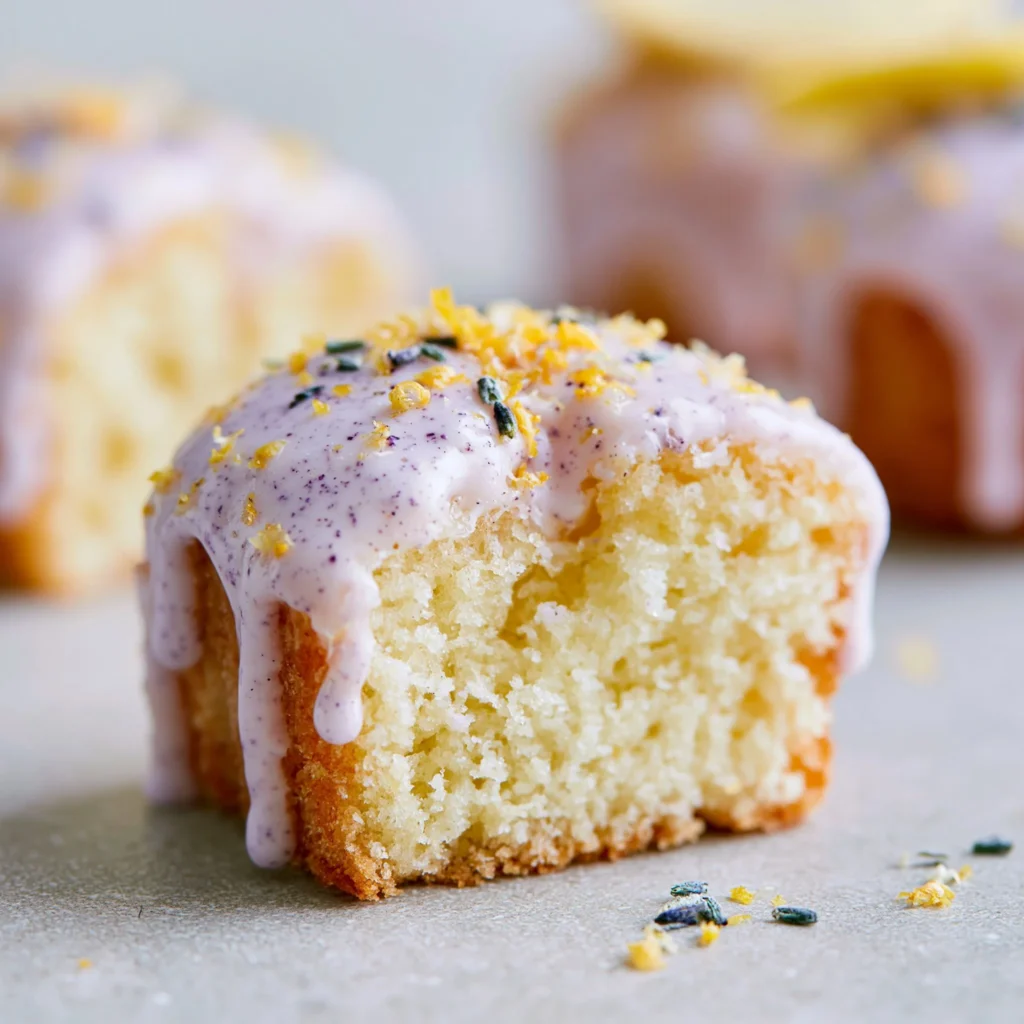
Spoon or drizzle glaze over the cooled mini cakes and let it set. Finish with edible flowers and a pinch of lemon zest right on top for color and a fresh lemon oil pop.
Tips for Best Results
- Don’t rush the room-temp step. Cold eggs or sour cream can make the batter look curdled, which can bake up slightly uneven.
- Use only the yellow part of the zest. The white pith is bitter; finely grated zest gives clean lemon aroma that carries through the crumb.
- Steep the lavender, then strain. Keeping the buds out of the glaze prevents speckling and avoids an over-strong floral hit in any one bite.
- Glaze thickness is everything. Too thin and it runs off; too thick and it looks chalky. Add the lavender milk a splash at a time until it flows slowly.
- Glaze on fully cooled cakes. You’ll get that neat, set finish instead of a melted, patchy top.
Variations and Substitutions
- Skip the flowers, keep the zest. A simple pinch of lemon zest on each cake still makes them look intentional and bright.
- Dial the lavender up or down carefully. Keep it subtle—this recipe’s 1/2 teaspoon is meant to be a whisper, not perfume.
- Make them as other minis you love. If you enjoy the petite format of my other upside-down mini cakes, you can use the same mindset here: even portions and a clean glaze finish.
How to Serve It

Serve these at cool room temperature once the glaze has set; that’s when the lemon aroma is clearest and the glaze has the nicest bite. I like them on a platter with extra lemon zest scattered around (it makes the whole tray smell fresh), and they’re especially good with a cup of tea. If you’re making a small brunch spread, add something simple alongside—like 3-ingredient banana oatmeal pancakes—and let these be the sweet, floral finish.
How to Store It
Once the glaze is set, store the mini cakes in a single layer in an airtight container so the tops stay smooth. They hold well at cool room temperature for a short stretch; for longer keeping, refrigerate and bring to room temperature before serving so the cake crumb softens again. If you’re garnishing with edible flowers, add them right before serving so they stay perky and bright.
Final Thoughts
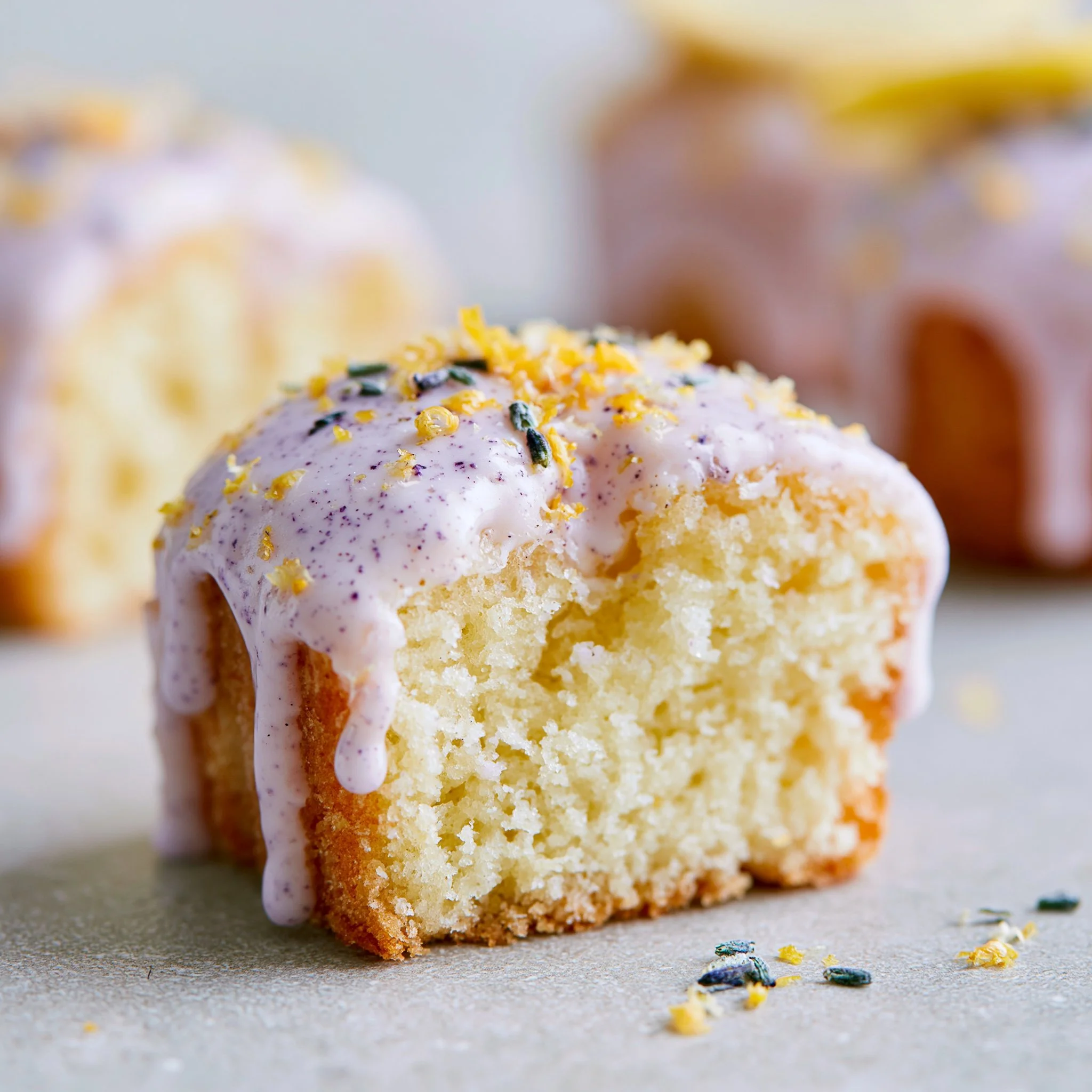
These mini lemon cakes are simple at heart—butter, sugar, zest, and a tender crumb—made special with that lavender-scented glaze and a tiny, pretty garnish. If you want a fresh, tidy dessert that looks like it came from a pastry case but still feels doable in a home kitchen, this batch delivers.
Conclusion
If you’d like to compare notes with the original inspiration, you can check out Mini Lemon Cakes With Lavender Glaze Recipe – Southern Living. For another take on the lemon-and-lavender pairing in cake form, this Citrus Cake with a Lemon-Lavender Glaze – She’s Got The Cooks is a fun read, and if you’re curious how the flavor plays in a denser crumb, see Lemon Pound Cake with Lavender Glaze – That Recipe.
Mini Lemon Cakes With Lavender Glaze
Ingredients
Method
- Have your ingredients at room temperature (butter, eggs, sour cream, and the 1/4 cup milk for the batter).
- In a bowl, whisk together the flour, 1/2 teaspoon kosher salt, and baking soda until evenly combined.
- In a separate larger bowl, beat the softened butter with the granulated sugar, brown sugar, and lemon zest until fluffy.
- Beat in the eggs one at a time, mixing until each disappears before adding the next.
- Add the sour cream, 1/4 cup whole milk, and 1 teaspoon vanilla extract. Mix just until blended and creamy.
- Add the flour mixture and mix just until you don’t see dry flour.
- Divide the batter among your mini cake wells and bake until the tops look set and spring back lightly when touched.
- Let the cakes cool until they’re no longer warm to the touch before you glaze.
- Warm the remaining 1/4 cup whole milk and add the culinary lavender. Let it sit to infuse a light floral aroma.
- Strain out the lavender and whisk together powdered sugar, 1/4 teaspoon kosher salt, and 1/8 teaspoon vanilla extract in a bowl.
- Add the lavender-infused milk gradually until the glaze is thick but pourable.
- Spoon or drizzle glaze over the cooled mini cakes and let it set.
- Finish with edible flowers and a pinch of lemon zest on top.